Exploratory Analysis and Feature Engineering
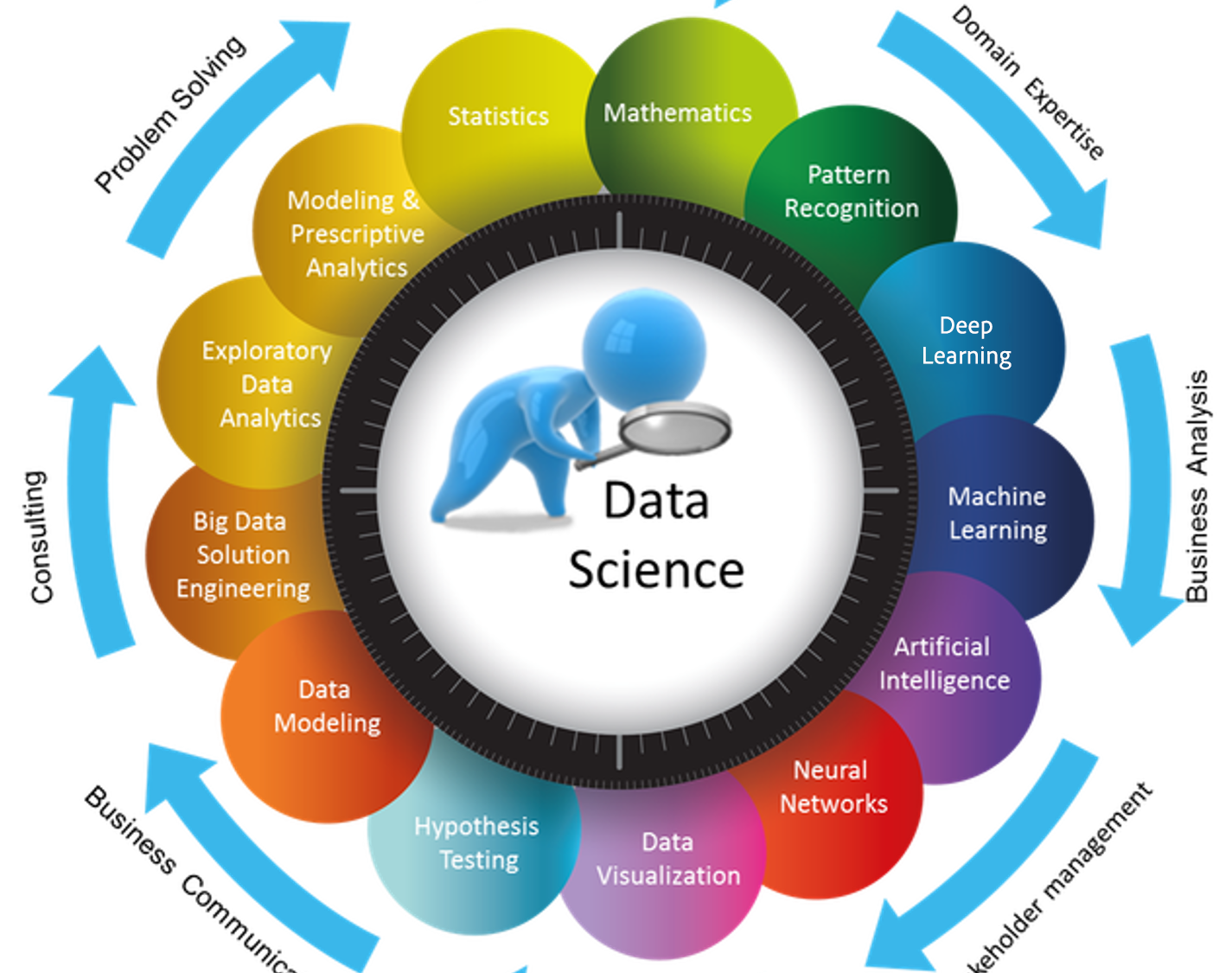
We provide comprehensive exploratory data analysis (EDA) to uncover patterns, anomalies and key drivers hidden in our clients’ data. Through statistical profiling, visualization and hypothesis-driven exploration, we generate actionable insights that inform both business decisions and model design. Building on this foundation, we carry out systematic feature engineering to construct, transform and select variables that maximize predictive power and model robustness. This combination ensures that downstream AI and machine learning initiatives start from a high-quality, business-aware data representation.
Machine Learning and Predictive Modeling
Our team designs and implements end-to-end machine learning workflows, covering model training, evaluation and optimization. We work with a broad family of algorithms—including regression, classification, clustering and generalized linear models—to solve forecasting, segmentation and decision-support problems across industries. For temporal and sequential data, we apply specialized time series analysis techniques to capture trends, seasonality and structural breaks. Where appropriate, we use optimization methods such as genetic algorithms to fine-tune model parameters and search complex solution spaces, improving accuracy, stability and performance in production environments.
Generative AI and Foundation Models
We develop tailored generative AI solutions that leverage the latest large language models (LLMs) and vision–language models (VLMs) to address domain-specific challenges. Our capabilities include building customized Retrieval-Augmented Generation (RAG) pipelines that connect models to enterprise data sources—documents, knowledge bases and transactional systems—while respecting security and governance requirements. By combining prompt engineering, fine-tuning and evaluation frameworks, we deliver solutions that can draft content, answer complex questions, assist with coding and provide multilingual support, all aligned with the client’s terminology and business rules.
Agent-Based AI Automation and Agentic Protocols
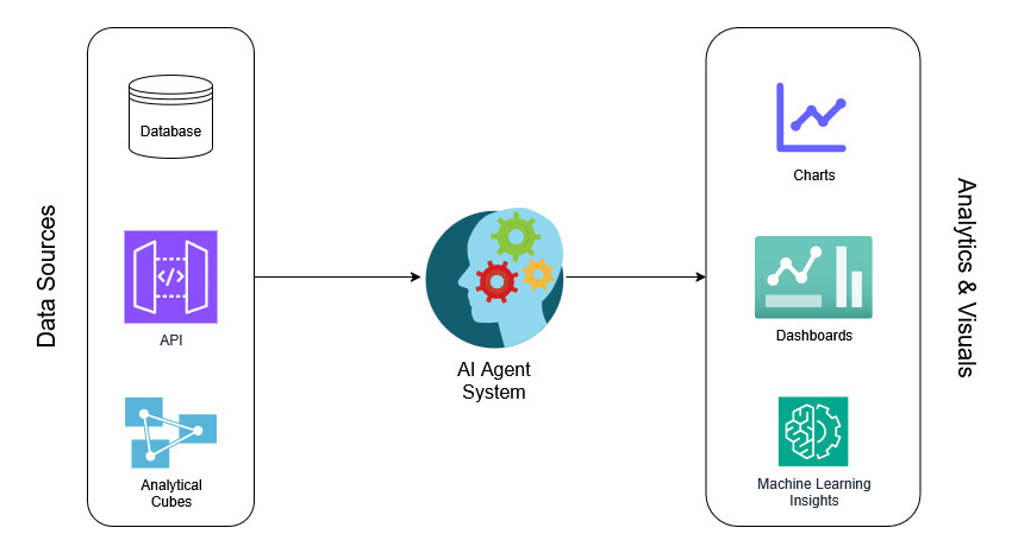
Beyond standalone models, we design advanced agent-based solutions that orchestrate multiple AI components into cohesive autonomous workflows. These agents can securely connect to databases, APIs, file systems and other data sources to retrieve information, execute Python scripts or shell commands, and trigger analytical or operational tasks. They are capable of generating charts and dashboards, conducting ad-hoc data analysis, writing reports, summarizing lengthy documents and extracting data from scanned PDFs. This agentic architecture enables organizations to automate complex knowledge-intensive processes, reduce manual workload and achieve consistent, repeatable decision support.
We implement these architectures using custom Model Context Protocol (MCP) servers, which expose enterprise data sources and tools to AI agents through a secure, standardized interface. In addition, our solutions are designed to leverage emerging agentic protocols such as Agent2Agent (A2A) for cross-platform agent-to-agent collaboration, AG-UI for rich, real-time agent–user interaction in web applications, and Agent Communication Protocol (ACP) for governed multi-agent coordination. By aligning with these open standards, we deliver agentic systems that are interoperable, observable and future-proof across heterogeneous IT environments.